Launch Lord of the ocean and catch the winnings!
Home → Symbols & Payouts
Lord of the Ocean Symbols
Symbol set of Lord of the Ocean
The Lord of the Ocean slot by Novomatic utilizes a classic 5x3 reel layout with 10 fixed paylines, establishing a structured grid for symbol evaluation. This configuration contrasts sharply with Alles Spitze, which Merkur developed using different mechanics and a high volatility profile alongside its own RTP of 90.85%. Players must align matching icons across these ten lines to trigger payouts, ensuring that every spin involves precise positional assessment on the five vertical reels.
Lord of the Ocean paytable and grid
| Grid | 5x3 |
| Paylines / ways | 10 lines |
| Bonus trigger | 3 or more Scatter symbols anywhere on the reels |
The game operates with a theoretical return to player rate of 95.10%, which implies a house edge of 4.90% over an extended period of gameplay. This specific percentage defines the long-term mathematical expectation for the Novomatic title, distinguishing it from other slots that may offer higher or lower retention rates for the casino operator. Consequently, players should anticipate that their bankroll will statistically decrease by nearly five percent relative to total wagers placed during extensive gaming sessions.
Ancient Greek mythology serves as the thematic core for Lord of the Ocean, featuring Poseidon and oceanic imagery throughout the symbol matrix. The visual design supports the high volatility setting, meaning wins occur less frequently but tend to be larger when they do materialize on the screen. This combination of theme and variance creates a distinct atmosphere compared to simpler fruit machines, appealing to those who prefer mythological narratives in their slot interactions.
High-paying symbols
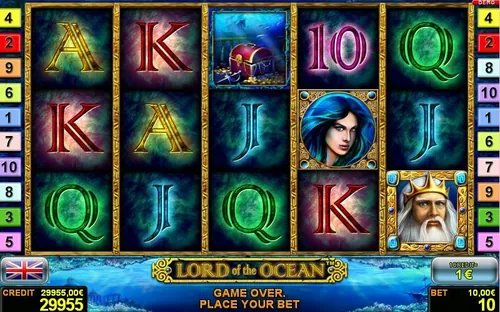
The highest value icons in Lord of the Ocean are represented by thematic characters from Ancient Greek lore, offering significant multipliers when landing in winning combinations. These premium symbols drive the maximum win potential of 5,000x the stake, providing substantial rewards for successful alignments on the 10 paylines offered by the Novomatic developer. Such high-value targets require strategic betting within the 0.10 to 100 range to maximize the payout efficiency of each individual spin.
In contrast to Alles Spitze, which caps its max win at 500x despite its high volatility, Lord of the Ocean allows for much larger single-session returns through its premium symbols. The 5,000x multiplier represents a tenfold increase in potential payout ceiling compared to the Merkur title, making the Novomatic slot more attractive for players seeking large jackpots. This difference highlights the varying risk-reward profiles available across different providers like Greentube and edict e-gaming.
The presence of these high-paying icons directly influences the hit frequency and overall volatility of the game, creating a tension between small regular wins and rare major payouts. Players engaging with Lord of the Ocean must accept this high volatility structure, where the distribution of symbols is skewed to favor fewer but more valuable outcomes. This mathematical characteristic ensures that the 95.10% RTP is achieved through occasional large distributions rather than constant small returns.
Low-paying symbols
The low-paying symbols in Lord of the Ocean consist of standard card ranks, typically ranging from Ten to Ace, which form the baseline for smaller victories. These icons appear more frequently than the high-value thematic symbols, helping to sustain player engagement during dry spells between bonus triggers on the 5x3 grid. Their contribution to the overall 95.10% RTP is marginal but essential for maintaining the game's volatility balance and providing consistent, albeit minor, cash returns.
Unlike Alles Spitze, which focuses heavily on its unique claim mechanic and high volatility, Lord of the Ocean relies on traditional card symbols to fill the reel strips. The Merkur title’s 90.85% RTP suggests a different mathematical model, whereas the Novomatic slot uses these common symbols to support its higher theoretical return. This structural difference means that Lord of the Ocean offers slightly better long-term value through its symbol distribution compared to some competitor products in the market.
The frequency of low-paying symbols ensures that players experience frequent small wins, which helps manage the bankroll during the high volatility phases of the game. With a bet range starting at 0.10, even modest payouts from these card icons can extend playtime significantly without depleting funds rapidly. This mechanism allows users to navigate the 4.90% house edge more comfortably, turning what might otherwise be a steep loss curve into a manageable gaming session.
Wild symbol behaviour
The Wild symbol in Lord of the Ocean substitutes for all other standard symbols to complete winning combinations along the active 10 paylines, enhancing the probability of a payout. This feature is crucial for maintaining the game's 95.10% RTP, as it fills gaps in otherwise losing spins and increases the overall hit frequency on the 5x3 grid. Without this substitution capability, the mathematical expectation of the Novomatic title would be significantly lower due to missed alignment opportunities.
Expanding Wilds add another layer of complexity to the Lord of the Ocean mechanics, potentially covering entire reels and creating multiple simultaneous winning lines for the player. This behavior distinguishes the game from simpler slots like Alles Spitze, which lacks such dynamic wild interactions despite its high volatility and 500x max win cap. The expansion feature significantly boosts the potential size of a single win, contributing to the 5,000x maximum win limit available in the Novomatic release.
The inclusion of Wilds also interacts with the Gamble feature, allowing players to risk existing wins after a successful wild-assisted combination for a chance to double or quadruple their earnings. This optional risk element adds a strategic dimension to the base game, letting users decide whether to secure the payout or attempt to increase it further. Such mechanics are absent in many basic slots, making Lord of the Ocean a more interactive experience compared to static games from competitors.
Scatter symbol behaviour
The Scatter symbol in Lord of the Ocean pays regardless of its position on the reels and is primarily responsible for triggering the Free Spins bonus round. This independence from the 10 fixed paylines ensures that players can still receive value even if the symbol does not align with other icons, supporting the game's 95.10% theoretical return. The scatter mechanic is a key driver of volatility, as it unlocks the potential for larger cumulative wins during the free play phase.
Unlike Alles Spitze, which relies on its specific claim mechanic and has a lower RTP of 90.85%, Lord of the Ocean uses Scatters to access its most lucrative features. The ability to trigger bonuses without strict line alignment gives the Novomatic title an advantage in player retention and engagement during non-winning streaks. This feature sets it apart from older video slots that lack such flexible bonus triggers, offering a more modern and rewarding gameplay loop for enthusiasts.
Lord of the Ocean: key facts
| Parameter | Value |
|---|---|
| Game | Lord of the Ocean |
| Studio | Novomatic (developed/operated via its digital division Greentube) |
| Released | 2008 |
| RTP | 95.10% |
| House edge | 4.90% |
| Volatility | high |
| Max win | 5,000x |
| Reels | 5x3 |
| Paylines / ways | 10 lines |
| Bet range | 0.10 – 100 |
Reading the paytable
The Lord of the Ocean slot by Novomatic displays a standard 5x3 reel layout with 10 fixed paylines, requiring players to consult the specific paytable for symbol values. This structured grid ensures that winning combinations must appear on adjacent reels starting from the leftmost position, defining the core mechanic of the game. Understanding these lines is essential because payouts depend entirely on matching symbols along these predetermined paths rather than scattered positions.
The maximum win potential in this Novomatic title reaches 5,000x the total bet, which establishes a high volatility profile for the player's bankroll management. Such a significant cap indicates that while wins may be less frequent, the payout structure rewards rare but substantial hits during extended play sessions. Players should note that the theoretical return over time is set at 95.10%, meaning the house retains a 4.90% edge across all outcomes.
Gamble features often allow users to double winnings after a line hit, though this optional mechanic does not alter the base RTP of 95.10% established by the developer. Greentube designed these risks to add excitement without changing the long-term mathematical expectation of the slot machine itself. Consequently, engaging with side bets increases variance but never improves the underlying percentage return expected from the game engine.
How wins are calculated
Wins in Lord of the Ocean are determined by landing three or more matching symbols on any of the 10 active paylines, starting from reel one. The bet size directly influences the payout amount, as the base value is multiplied by the stake per line, ranging from 0.10 up to 100 units. This linear scaling ensures that higher wagers yield proportionally larger returns when winning combinations occur during the spin cycle.
The expanding wild feature substitutes for other symbols to complete winning lines, effectively increasing the probability of a payout on any given spin. When a wild expands to cover an entire reel, it creates multiple simultaneous opportunities for matches across the 5x3 grid structure. This mechanic interacts with the high volatility setting, often leading to sudden spikes in account balance during bonus triggers.
A scatter pays regardless of its position on the reels, typically triggering the free spins round when enough icons appear anywhere in view. Unlike standard symbols, scatters do not require adjacency, allowing for flexible win conditions that enhance the overall hit frequency. This independence from paylines means that even non-matching patterns can initiate valuable bonus phases within the game loop.
Line wins versus ways wins
Lord of the Ocean utilizes a traditional 10-line system rather than a ways-to-win mechanic, requiring precise alignment of symbols on fixed horizontal or diagonal paths. This contrasts sharply with titles like Book of Dead by Play'n GO, which uses 5x3 reels but awards wins via adjacent matching symbols from the left. The fixed line approach demands stricter strategy regarding bet coverage and symbol placement for optimal returns.
In a line-based game, only specific patterns count as wins, whereas ways systems award payouts for any adjacent match regardless of vertical position. This distinction significantly impacts the hit frequency, as line games often have lower frequencies but higher individual payouts per win event. Players switching from ways games must adjust their expectations regarding how often small wins occur during a session.
The 10 paylines in this Novomatic slot provide a clear framework for calculating potential returns, with each line evaluated independently after the reels stop. Betting on all lines maximizes the chance of hitting a combination, as partial line bets would leave certain winning patterns uncounted. This structure offers transparency in odds, unlike complex ways mechanics that obscure exact winning probabilities behind broader rules.
Bet size and symbol value
The minimum bet in Lord of the Ocean starts at 0.10, while the maximum allowable stake reaches 100, accommodating both casual players and high rollers. This wide range allows users to scale their risk exposure according to their bankroll, ensuring accessibility across different budget levels. Adjusting the coin value or bet level directly alters the cost per spin without changing the underlying symbol hierarchy or paytable structure.
Symbol values are tiered based on rarity, with low-paying card ranks offering modest multipliers and high-value themed icons providing substantial payouts. The ancient Greek theme dictates these values, where Poseidon and other deities carry the highest weights in the payout matrix. Players must align their bet size with the desired risk profile, as higher stakes amplify both losses and the 5,000x max win potential.
Unlike progressive slots, the symbol values remain static throughout the base game, only changing impact during free spins or gamble features. This consistency allows for straightforward calculation of potential returns based on the known paytable and current bet configuration. The 95.10% RTP remains constant regardless of bet size, ensuring that the house edge of 4.90% applies uniformly across all wagering levels.
Multipliers on the reels
Expanding wilds in Lord of the Ocean act as dynamic multipliers by substituting for missing symbols to complete high-value combinations on the 5x3 grid. This feature effectively increases the payout of a single spin by filling gaps that would otherwise result in a loss. The presence of these wilds is crucial for achieving the game's maximum win of 5,000x, as they facilitate rare but lucrative alignments.
Free spins rounds often introduce additional multiplier effects, enhancing the base win values generated during the bonus phase. These enhancements do not alter the fundamental RTP of 95.10% but redistribute the payout distribution toward fewer, larger events. Players benefit from these boosts when volatility is high, as they compensate for the longer dry spells typical of such slot designs.
The Gamble feature allows players to risk existing winnings for a chance to double them, acting as a temporary multiplier on their current balance. This optional mechanic introduces a binary outcome that can significantly impact short-term results without affecting the long-term statistical expectation. Engaging with gambles requires careful bankroll management, as consecutive losses can quickly erode profits accumulated during the main game.
Special symbols in the bonus
The expanding wild acts as a central anchor for payouts, substituting for all standard symbols to complete winning combinations across the 10 paylines. This feature triggers during the free spins round, where the wild expands to cover the entire reel and remains sticky for the duration of the retriggered spins. Players benefit from increased hit potential on high-value reels, as the wild effectively reduces the distance between matching symbols.
A scatter symbol pays regardless of its position on the 5x3 grid, serving as the primary trigger for the bonus round without requiring a specific line alignment. Landing three or more scatters awards the initial set of free spins, granting access to the expanding wild mechanic that defines the game's volatility profile. The payout structure ensures that even non-matching rows generate returns when the scatter appears in sufficient quantity.
The Gamble feature offers an optional risk layer after any win, allowing players to double their reward by guessing the color or suit of a hidden card. This mechanic operates independently of the main bonus but can significantly amplify the base value of a spin before the session concludes. Using this feature requires explicit consent per win, ensuring that the theoretical RTP of 95.10% remains unaffected by player choice.
Symbol upgrades and collections
Novomatic’s Lord of the Ocean utilizes a static symbol hierarchy rather than dynamic upgrade mechanics, with premium icons representing ancient Greek deities and artifacts. These high-value symbols carry fixed multipliers that scale according to the number of occurrences on an active payline, capping at the maximum win of 5,000x. Unlike modern video slots that introduce evolving tiers, this design relies on consistent payout tables defined by the Greentube studio.
Wild symbols function exclusively as substitutes for other regular icons and do not transform into higher-tier assets during gameplay or bonus rounds. The absence of collection mechanics means players cannot accumulate fragments to unlock special features, focusing attention instead on landing full sets of identical premium symbols. This structural simplicity aligns with the game’s 2008 release date and traditional slot architecture.
Comparing this approach to Big Bass Splash reveals a stark contrast in progression systems, as Pragmatic Play’s title employs a fish-catching meter that upgrades throughout the free spins. Lord of the Ocean lacks such cumulative trackers, offering immediate gratification through the expanding wild rather than long-term symbol evolution. This distinction highlights the classic nature of Novomatic’s design philosophy versus contemporary hybrid mechanics.
Grid layout and symbol positions
The game operates on a standard 5x3 reel configuration, providing five vertical columns and three horizontal rows for symbol alignment across ten fixed paylines. This layout ensures that every spin evaluates a consistent grid area, with wins calculated from left to right along predefined paths. The physical arrangement of reels influences the probability of adjacent matches, directly impacting the high volatility rating assigned to the title.
Each of the fifteen visible positions on the grid holds equal weight in determining outcomes, with no stacked symbols or mega-reels altering the spatial distribution. The symmetry of the 5x3 matrix allows for predictable evaluation patterns, facilitating straightforward analysis of hit frequency and win potential. This uniformity supports the theoretical return of 95.10% over extended play sessions.
Unlike some modern variants that expand beyond the standard three-row height, Lord of the Ocean maintains a compact vertical profile that limits the maximum simultaneous wins per spin. The fixed height constrains the number of concurrent payline activations, keeping the focus on single-line excellence rather than cluster-based payouts. This design choice reinforces the traditional feel associated with Greentube’s early digital adaptations.
Frequency of premium symbols
High-value symbols appear with lower frequency compared to low-paying card ranks, a characteristic inherent to the high volatility setting of the game. This disparity ensures that while small wins occur regularly, substantial payouts requiring multiple premium icons are rarer and more impactful. The distribution algorithm balances these frequencies to maintain the stated house edge of 4.90% over millions of spins.
The probability of landing three or more premium symbols on an active payline dictates the baseline win rate, which fluctuates significantly due to the random number generator’s variance. Players should expect longer dry spells between major hits, a trait confirmed by the 95.10% RTP figure which smooths out short-term deviations. This statistical reality necessitates bankroll management strategies tailored for volatile titles.
In contrast to Big Bass Splash, which achieves a higher RTP of 96.71% partly through more frequent bonus triggers, Lord of the Ocean relies on larger individual payouts to compensate for its lower return percentage. The reduced frequency of premium symbols directly contributes to the game’s risk profile, appealing to players seeking larger swings rather than steady returns. This trade-off defines the core experience of the Novomatic release.
Paytable details worth checking
The maximum win cap is set at 5,000x the total bet, establishing a hard limit on potential payouts regardless of stake size or feature duration. For a maximum bet of 100 €, this ceiling restricts the highest possible outcome to 500,000 €, a significant sum that underscores the high-risk nature of the game. Players must recognize this boundary when calculating expected value during extended sessions.
Bet ranges span from 0.10 € to 100 €, allowing flexibility for both casual players and high rollers within the same mathematical framework. Each increment in stake proportionally increases the payout values displayed in the paytable, ensuring that the relative importance of each symbol remains constant. This linear scaling simplifies bankroll planning, as the ratio of risk to reward does not shift with wager adjustments.
Understanding the paytable requires noting that scatter payouts are independent of paylines, meaning they contribute to the overall return without relying on specific alignments. This feature adds complexity to the win calculation, as players receive credits for scattered icons even if no other symbols form a combination. Such nuances highlight the importance of reviewing the rules before engaging with the expanding wild or free spins mechanics.
DemoRTP & VolatilitySymbols & PayoutsBonus FeaturesStrategyBonusesMobileDownload & AppMax WinSimilar GamesReviewFAQSitemap
Lord of the ocean 2025