
Launch Lord of the ocean and catch the winnings!
Home → Strategy
Lord of the Ocean Strategy
Approaching Lord of the Ocean sensibly
Lord of the Ocean is a slot developed by Novomatic and Greentube, featuring a 5x3 reel layout with 10 paylines. This structure supports a maximum win cap of 5,000x, which stands in contrast to Alles Spitze's lower limit of 500x. Players should recognize that this high multiplier potential defines the game's payout ceiling rather than frequent small wins.
The theoretical return to player (RTP) is set at 95.10%, establishing a house edge of 4.90% over extended play sessions. This percentage indicates the long-term expected return, distinguishing it from short-term variance or session outcomes. Understanding this metric helps players manage expectations regarding the statistical likelihood of recouping stakes over time.
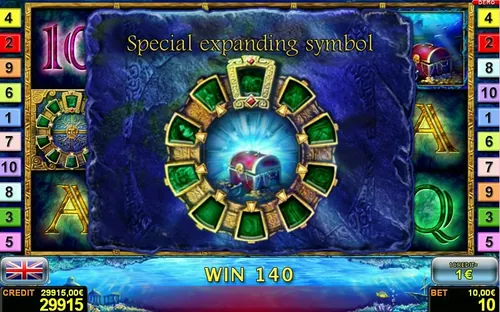
Ancient Greek themes characterize the visual design, incorporating expanding wilds and free spins as core mechanics. These features interact with the 10-line grid to create specific winning combinations during base and bonus rounds. The Gamble feature offers an additional layer of risk, allowing players to potentially double winnings after a standard victory.
Bankroll rules that hold up
A defined bankroll represents the total funds allocated for gaming activities, separate from personal finances. Lord of the Ocean allows bets ranging from 0.10 to 100 per spin, requiring players to size their deposits accordingly. Flat betting maintains consistent wager amounts, preventing rapid depletion of funds during losing streaks compared to progressive staking strategies.
The minimum stake of 0.10 enables longer session durations, extending gameplay across hundreds of spins before significant capital erosion occurs. Conversely, the maximum bet of 100 accelerates volatility exposure, testing the resilience of smaller bankrolls against high-variance swings. Proper allocation ensures that even high-stakes attempts remain within affordable limits without compromising financial stability.
Comparative analysis shows that games like Alles Spitze operate with different volatility profiles despite similar thematic elements. Lord of the Ocean’s 95.10% RTP suggests a moderate retention rate for the operator, influencing the frequency of medium-sized payouts. Players must adjust their bankroll size to accommodate the 5,000x max win potential, which requires sufficient buffer against dry spells.
Bet sizing against volatility
High volatility in Lord of the Ocean dictates larger fluctuations between wins, necessitating strategic bet sizing to sustain play. With a maximum win of 5,000x, players engaging higher stakes face greater variance but also access larger potential payouts relative to their investment. This dynamic contrasts with lower-volatility titles that offer more frequent but smaller returns, affecting overall bankroll management approaches.
Betting 100 per spin on a 5x3 grid with 10 lines exposes the bankroll to rapid decline if hitting frequency remains low. In contrast, maintaining a 0.10 stake preserves capital longer, allowing more opportunities to trigger the Gamble feature or free spins round. The choice between these extremes depends on individual risk tolerance and the specific financial goals established before opening the game interface.
Theoretical calculations indicate that sustained play at higher stakes increases the probability of exhausting funds before reaching the 5,000x cap. Players utilizing Alles Spitze, which caps at 500x, experience less extreme variance due to its different mathematical model. Lord of the Ocean demands careful monitoring of balance changes, ensuring that bet sizes align with the available bankroll to avoid premature termination of sessions.
Session limits worth setting
Setting a loss limit prevents excessive spending by defining the maximum amount acceptable to lose during a single gaming session. Lord of the Ocean’s 95.10% RTP implies that prolonged play will statistically converge toward this return rate, making uncontrolled betting risky. Establishing a hard stop protects players from chasing losses, which only accelerates bankroll depletion through negative progression systems.
Time-based limits complement financial boundaries by capping the duration of interaction with the 5x3 reel layout and 10 paylines. Extended sessions increase exposure to the 4.90% house edge, gradually eroding initial deposits regardless of short-term wins. Limiting playtime ensures that decisions remain rational, avoiding fatigue-induced errors that often lead to impulsive wagering behavior.
Comparison with titles like Alles Spitze highlights the importance of tailored limits based on specific game mechanics. While both games offer unique features, Lord of the Ocean’s expanding wilds and free spins require different pacing strategies. Players should define clear exit criteria before starting, ensuring that engagement with the Ancient Greek theme does not override disciplined financial controls.
Why chasing losses fails
Chasing losses involves increasing bet sizes after deficits to recover previous money, a strategy that contradicts responsible gaming principles. Lord of the Ocean’s high volatility amplifies the risk of such approaches, as extended losing streaks are common before triggering bonus features. Progressive staking does not alter the built-in 4.90% house edge, merely accelerating the rate of bankroll exhaustion during unfavorable variance periods.
The maximum win of 5,000x cannot be guaranteed through increased wagering, as outcomes depend on random number generation within the 10-line structure. Attempting to force results against the 95.10% RTP ignores the statistical independence of each spin, leading to irrational decision-making. Players who adhere to flat betting maintain control over their expenditure, avoiding the emotional turbulence associated with recovery attempts.
Games like Alles Spitze demonstrate that varying volatility levels require distinct psychological approaches to loss management. Lord of the Ocean’s specific mechanics, including the Gamble feature, may tempt players to reinvest winnings aggressively after minor successes. Recognizing that no betting system can overcome the inherent house advantage reinforces the necessity of accepting losses as part of the gaming experience.
Lord of the Ocean: key facts
| Parameter | Value |
|---|---|
| Game | Lord of the Ocean |
| Studio | Novomatic (developed/operated via its digital division Greentube) |
| Released | 2008 |
| RTP | 95.10% |
| House edge | 4.90% |
| Volatility | high |
| Max win | 5,000x |
| Reels | 5x3 |
| Paylines / ways | 10 lines |
| Bet range | 0.10 – 100 |
Common systems and their limits
Novomatic designed Lord of the Ocean with a 95.10% RTP, which establishes a mathematical house edge of 4.90% for every wager placed by players over time. This theoretical return applies strictly to long-term averages across hundreds of thousands of spins rather than short sessions or individual betting strategies. Players relying on pattern recognition will find that random number generation prevents any system from altering this built-in advantage held by the casino.
The high volatility setting means payouts are irregular, requiring patience as wins may be scarce between significant events in the gameplay loop. A maximum win cap of 5,000x sets a hard ceiling on potential returns, ensuring no single spin can generate unlimited wealth regardless of bet size. This limit protects the operator while capping player upside during lucky streaks.
Unlike Book of Dead which offers a higher 96.21% RTP, Lord of the Ocean presents a slightly steeper mathematical challenge for those seeking better odds. The 10 paylines provide straightforward winning combinations but lack the complex mechanics found in modern video slots with expanding wilds or cascading reels. Gamblers must accept that variance will dominate short-term results despite the stable long-run expectations defined by the game engine.
Flat betting explained
Flat betting involves maintaining a constant stake of 0.10 € per spin, which allows players to extend their bankroll duration significantly compared to variable wagering approaches. This strategy minimizes risk exposure by preventing rapid depletion of funds during losing streaks common in high volatility games like Lord of the Ocean. Consistency here ensures that the 95.10% RTP manifests accurately over extended play sessions without distortion from erratic bet sizes.
Using the minimum bet of 0.10 € reduces the cost per hour substantially, allowing for more spins within a fixed budget allocated for entertainment purposes. This approach contrasts sharply with progressive methods that increase stakes after losses, which only accelerate the inevitable erosion of the player's financial resources. Maintaining a steady pace helps preserve capital while waiting for the occasional free spins trigger or expanding wild combination.
Book of Dead permits similar flat betting strategies but its higher RTP of 96.21% offers marginally better long-term retention for disciplined players. Lord of the Ocean’s 5x3 reel layout supports simple visual tracking of outcomes, making it easier to monitor win frequency without complex interface distractions. Players choosing this method should anticipate slower growth due to the lower percentage return compared to alternatives available in the market.
Progressive staking risks
Progressive staking requires raising stakes after losses, a method that fails to overcome the 4.90% house edge inherent in Lord of the Ocean’s mathematical model. Each additional wager increases exposure to variance, meaning a prolonged losing run can deplete even a substantial bankroll before a major payout occurs. The 5,000x max win does not guarantee recovery because hitting such multipliers is statistically rare in high volatility environments.
Increasing bets after each loss accelerates the rate at which funds disappear, turning moderate losses into catastrophic ones within minutes of play. Unlike flat betting which preserves capital, this aggressive approach assumes luck will reverse quickly, ignoring the independent nature of each spin outcome. The 0.10 € to 100 € range allows large wagers, but using them progressively amplifies risk exponentially rather than mitigating it.
Book of Dead shares similar volatility traits, yet its 96.21% RTP provides a slightly better buffer against ruin when employing risky staking systems. Lord of the Ocean’s ancient Greek theme does not influence the underlying mathematics, which remain unchanged regardless of narrative elements or bonus features. Players attempting to beat the system often exceed their intended loss limits, demonstrating why mathematical edges cannot be defeated through betting patterns alone.
What the maths actually allows
Lord of the Ocean operates with a 95.10% RTP, meaning for every 100 € wagered, approximately 95.10 € is returned to players over infinite spins. This figure represents a long-term average derived from millions of simulations, not a promise of immediate returns for individual gaming sessions or short visits. Understanding this distinction prevents misconceptions about guaranteed profitability or predictable short-term outcomes based on theoretical percentages alone.
The high volatility classification indicates that wins occur infrequently but tend to be larger when they do happen, aligning with the 5,000x maximum win potential. Players must withstand dry spells where no returns appear for many spins, testing patience and bankroll management skills essential for sustainable play. This structure rewards discipline, as impulsive betting during droughts typically leads to faster depletion of funds before any significant payout materializes.
Comparing Lord of the Ocean to Book of Dead reveals a 1.11% difference in RTP, favoring the latter for players prioritizing long-term value retention. Lord of the Ocean’s 10 paylines offer simpler winning opportunities but lack the depth of features found in competitors with higher return percentages. Gamblers should recognize that while themes vary, the mathematical foundation remains the primary determinant of expected loss rates over time.
Reading variance honestly
High volatility in Lord of the Ocean means standard deviation is elevated, causing significant swings in bankroll balance during typical playing sessions. Players experience periods of zero returns interspersed with large wins, reflecting the 5,000x max win capability distributed unevenly across the game timeline. This behavior requires mental fortitude to endure losing streaks without deviating from predetermined budget limits or chasing losses aggressively.
The 95.10% RTP ensures that over vast numbers of spins, losses converge toward the 4.90% house edge, but short-term results remain highly unpredictable. Variance dictates that even skilled players cannot predict when expanding wilds or free spins will activate, making outcome prediction impossible regardless of strategy. Accepting randomness as a core mechanic helps maintain realistic expectations about win frequency and payout timing during gameplay.
Book of Dead exhibits comparable volatility levels, yet its superior 96.21% RTP offers a modest advantage in reducing overall expected loss rates for consistent players. Lord of the Ocean’s Poseidon theme adds aesthetic appeal but does not alter the fundamental probability distribution governing symbol matches and bonus triggers. Analyzing historical data confirms that variance drives session-to-session inconsistency, emphasizing the need for strict financial controls and emotional regulation.
Learning the game in demo first
Lord of the Ocean is a five-reel, three-row slot with ten paylines developed by Novomatic studio Greentube. The theoretical return to player stands at 95.10 percent, which establishes a house edge of 4.90 percent over extended play sessions. This mathematical baseline means that initial bankroll erosion occurs steadily unless the player leverages the expanding wild and free spins features effectively.
The volatility rating is high, indicating that winning combinations appear less frequently but carry larger potential payouts when they do land. A maximum win cap of 5,000x the stake defines the upper boundary for any single session outcome within this specific game structure. Players should anticipate longer dry spells between wins compared to low-volatility alternatives like Big Bass Splash, which offers a different risk profile despite similar reel layouts.
Free spins rounds can be triggered during standard gameplay, offering a risk-free opportunity to test the Gamble feature without depleting the primary balance. The ancient Greek theme featuring Poseidon remains consistent across all 10 active lines, providing clear visual feedback for every spin result. Understanding these mechanics before risking real funds ensures that players recognize the difference between short-term variance and long-term RTP adherence.
Adjusting stakes to your budget
The betting range spans from a minimum of 0.10 euros up to a maximum of 100 euros per spin on Lord of the Ocean. Flat betting strategies involve maintaining a constant stake throughout the session, which prevents rapid bankroll depletion during inevitable losing streaks. Progressive staking systems that raise bets after losses fail to alter the built-in 4.90 percent house edge and only accelerate time to ruin.
A starting bankroll of 100 euros allows for approximately 1,000 spins at the minimum stake level of 0.10 euros per round. This volume provides sufficient data points to observe the actual hit frequency against the theoretical 95.10 percent return over a manageable timeframe. Exceeding this budget significantly increases exposure to the high volatility inherent in the game without improving the expected value of each wager.
Maximizing the bet to 100 euros reduces the total number of spins available from a fixed bankroll to just one unit per thousand euros deposited. High-stakes play accelerates the realization of the 4.90 percent house edge, making it crucial to set strict loss limits before initiating the session. Comparing this to Big Bass Splash reveals that while both games share a 5x3 reel layout, the stake flexibility differs significantly based on individual risk tolerance.
Recognising a bad session
A session becomes statistically unfavorable when the actual return drops significantly below the 95.10 percent RTP over hundreds of spins. Lord of the Ocean operates with high volatility, meaning extended periods without hitting the 5,000x max win or triggering free spins are normal occurrences. Players must distinguish between temporary variance and a genuine deviation caused by external factors rather than blaming the game mechanics themselves.
Chasing losses through progressive staking does not change the mathematical expectation, as the house edge remains fixed at 4.90 percent regardless of bet size. If a player has already lost half their initial bankroll, continuing to play increases the probability of total ruin without improving odds. The expanding wild feature cannot compensate for a negative variance trend that persists beyond the statistical norm for high-volatility slots.
Comparing current performance to Big Bass Splash highlights how different volatility profiles affect perceived session quality despite similar max win caps. Lord of the Ocean requires patience due to its higher variance, whereas other titles might offer more frequent smaller wins. Recognizing when to stop involves monitoring the remaining bankroll relative to the initial deposit and acknowledging that no strategy can overcome the long-term 4.90 percent disadvantage.
Stopping while ahead
Securing profits becomes possible when a player hits the 5,000x max win limit or accumulates gains exceeding the initial deposit during Lord of the Ocean gameplay. With a theoretical RTP of 95.10 percent, any short-term profit represents positive variance rather than a sustainable advantage over the house. Cash-out decisions should be based on predefined targets rather than emotional reactions to recent winning streaks.
The Gamble feature allows players to double winnings from free spins, but using it repeatedly risks forfeiting accumulated profits back into the 4.90 percent house edge. Stopping after a successful gamble sequence preserves the net gain and prevents the common pitfall of trying to extend luck beyond statistical probability. This discipline is essential because the high volatility ensures that large wins are inevitably followed by periods of lower returns.
Big Bass Splash offers a comparable 5,000x max win potential but may trigger bonus rounds differently due to its distinct provider mechanics. Lord of the Ocean players must decide whether to continue playing after hitting significant milestones or withdraw funds to lock in the variance benefit. Setting a hard withdrawal limit ensures that the temporary upside of the 95.10 percent RTP game does not evaporate during subsequent high-variance swings.
Responsible play in practice
Responsible gambling requires treating the 4.90 percent house edge as an unavoidable cost of entertainment rather than a challenge to be beaten by Lord of the Ocean. The high volatility nature of the game means that bankroll management is critical to avoid rapid depletion during non-winning periods. Players should never chase losses with the expectation that the next spin will recover previous deficits given the fixed mathematical reality.
The availability of a 300 percent welcome bonus up to 2,000 euros plus 100 free spins introduces additional wagering requirements that complicate pure RTP analysis. Bonus funds often come with restrictions that alter the effective house edge and require careful tracking of turnover obligations before withdrawal eligibility. Ignoring these terms can lead to unexpected restrictions on withdrawing profits generated from the base game or bonus triggers.
Big Bass Splash serves as a reference point for understanding how different providers structure their volatility and bonus features within similar max win frameworks. Lord of the Ocean demands strict adherence to pre-set budgets because its 95.10 percent return only manifests over hundreds of thousands of spins. Maintaining discipline regarding stake sizes and session duration ensures that the gaming experience remains within safe financial boundaries defined by the 0.10 to 100 euro betting range.
DemoRTP & VolatilitySymbols & PayoutsBonus FeaturesStrategyBonusesMobileDownload & AppMax WinSimilar GamesReviewFAQSitemap
Lord of the ocean 2025